
Classic Sourdough Bread
A rustic, tangy sourdough loaf with a crackling crust and open crumb. This two-day process uses an active sourdough starter for deep flavor.
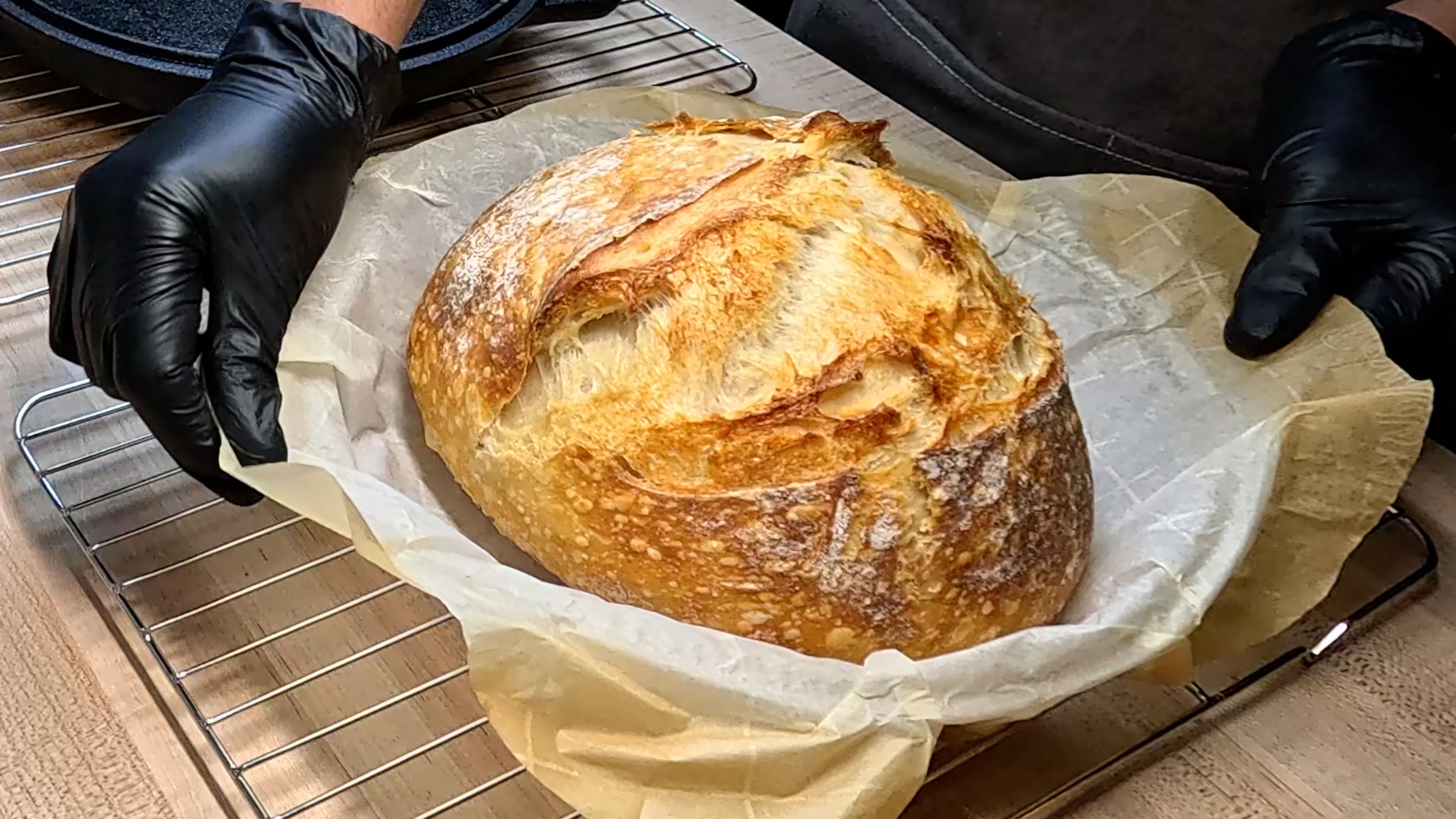
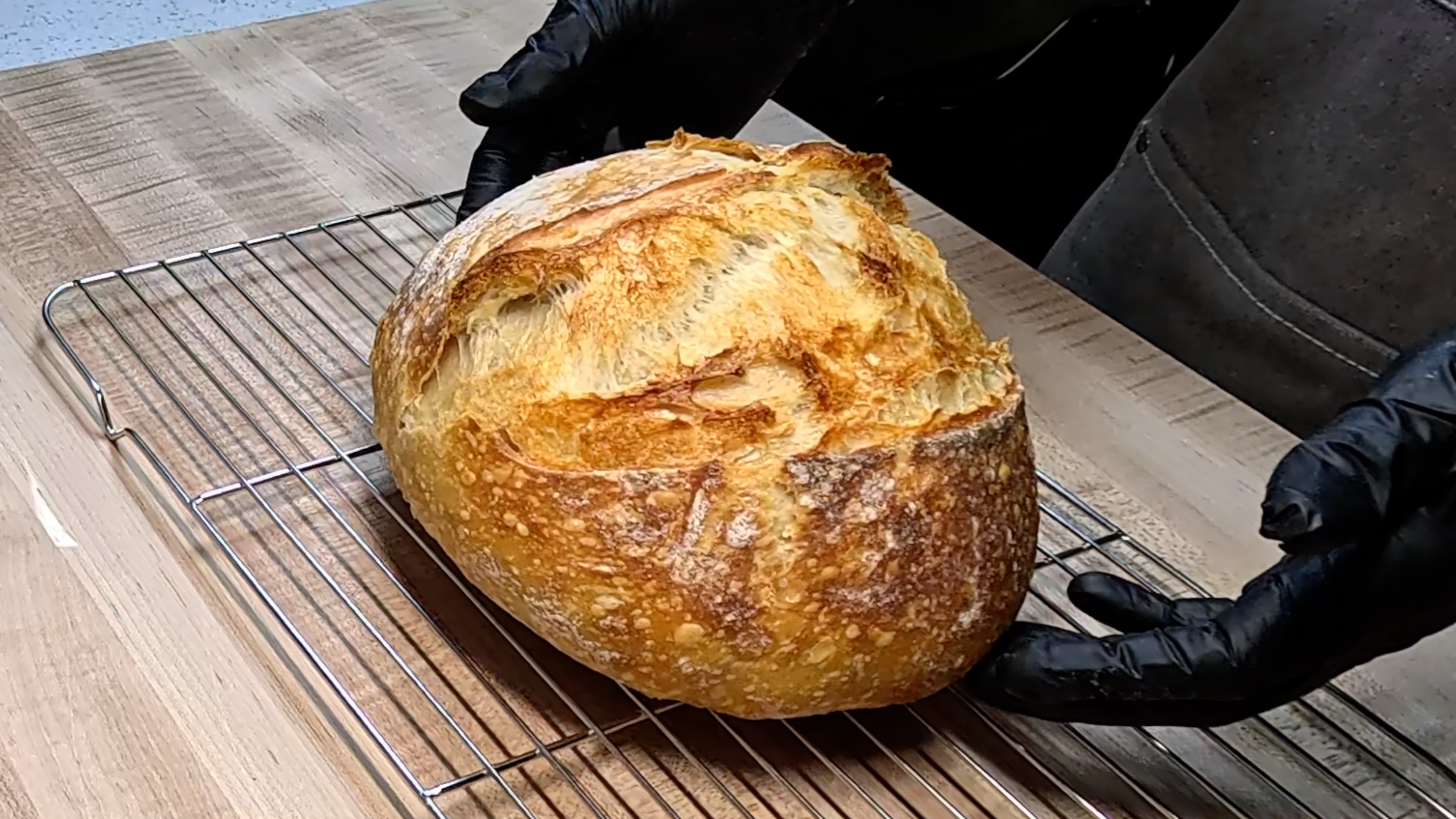
Sourdough bread is the oldest form of leavened bread, dating back thousands of years. The magic happens through wild yeast and lactobacillus bacteria that naturally ferment the dough, creating complex flavors and a beautifully open crumb structure.
Instructions
- 1
Feed your sourdough starter: combine 50g starter, 50g bread flour, and 50g filtered water. Place in a warm spot for 4-6 hours until doubled in size.
- 2
Mix dough: combine 250g warm water, 100g active starter, 6g salt, and 360g bread flour. Mix until no dry flour remains.
- 3
Cover and let rest for 30-60 minutes (autolyse).
- 4
Perform the first set of stretch and folds. Grab one side of the dough, stretch it up, and fold it over. Rotate 90 degrees and repeat 4 times.
- 5
Wait 30 minutes, then perform the second set of stretch and folds.
- 6
Wait 30 minutes, then perform the third set of stretch and folds.
- 7
Cover the bowl and refrigerate for 12-15 hours (overnight cold retard).
- 8
Shape the dough: turn out onto a floured surface, pre-shape into a round, rest 20 minutes, then final shape and place in a floured banneton.
- 9
Proof in the refrigerator for 3-4 hours.
- 10
Preheat oven to 500°F (260°C) with Dutch oven inside for at least 45 minutes.
- 11
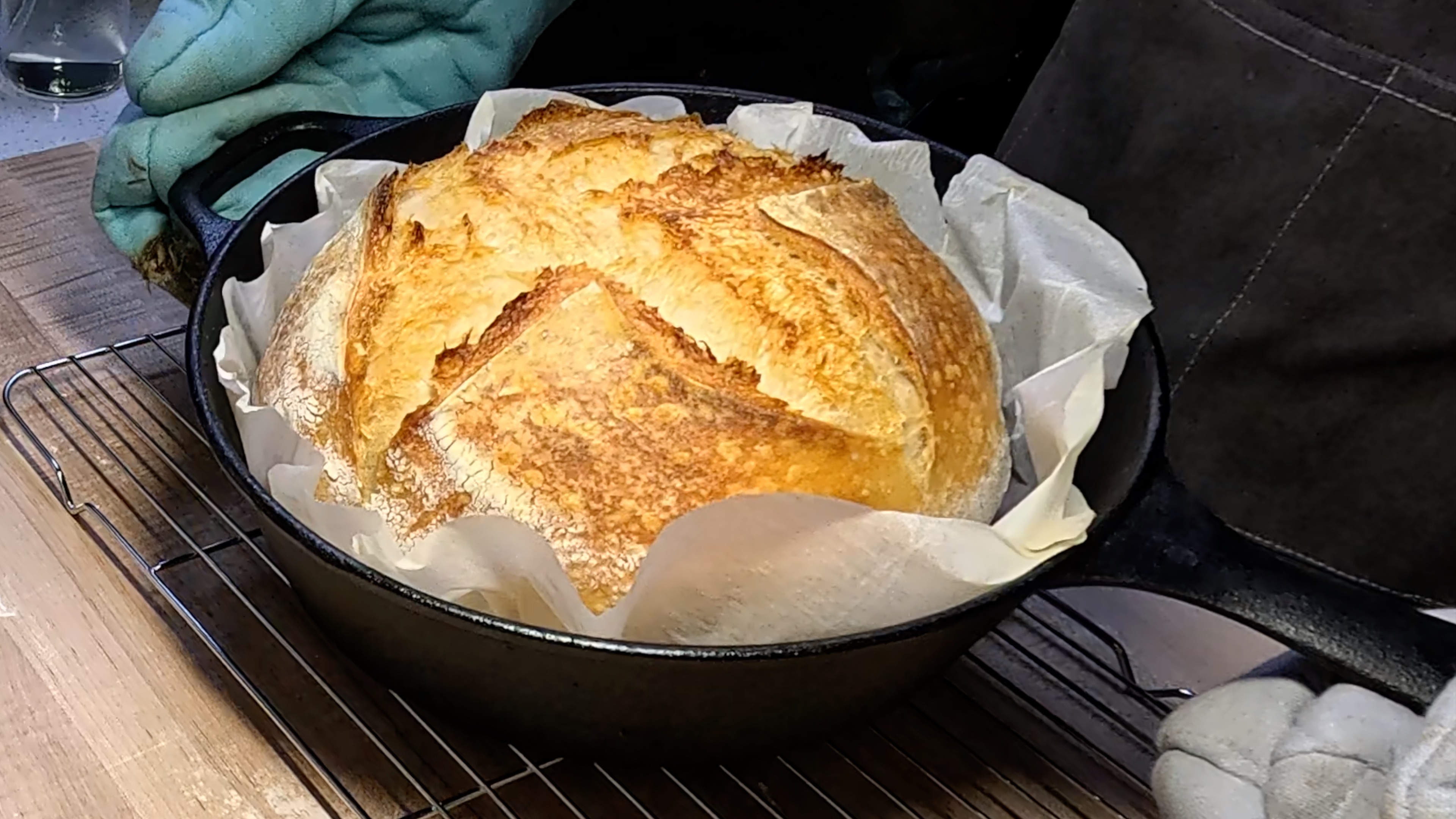
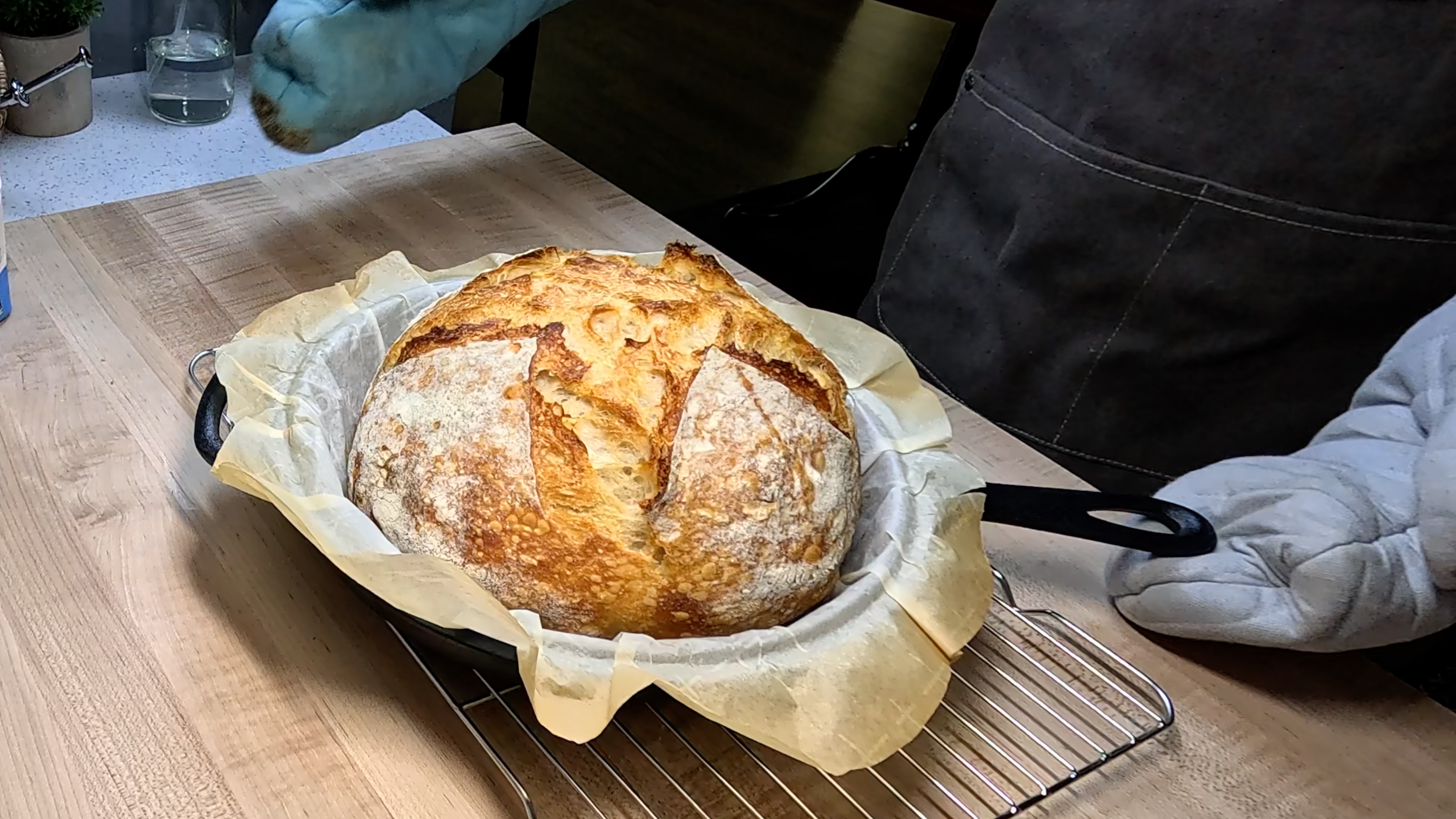
Score the dough with a lame or razor blade. Place in Dutch oven, reduce to 450°F (232°C), and bake covered for 30 minutes.
- 12
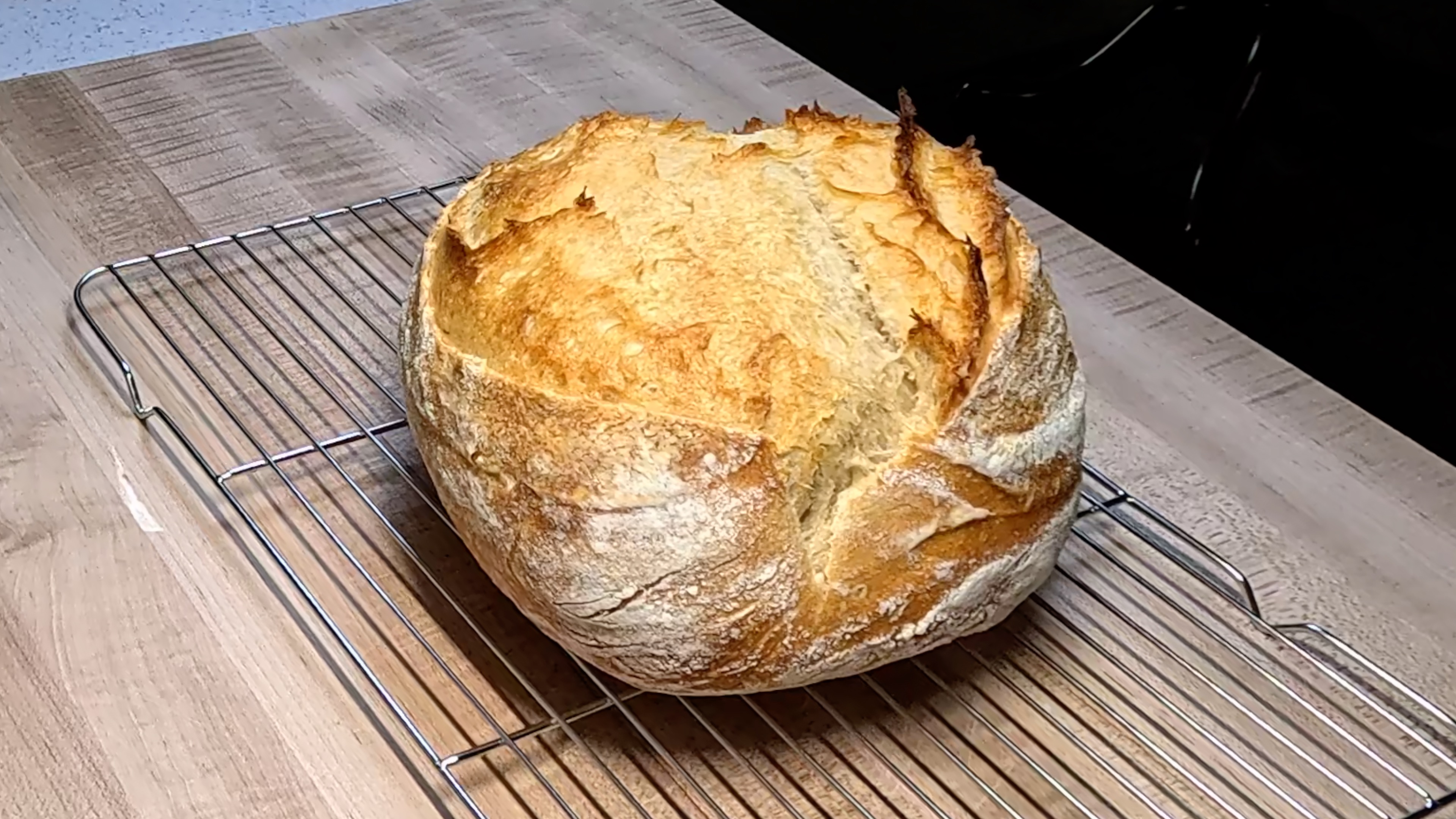
Remove lid and bake for 15-20 more minutes until deep golden brown. Internal temperature should reach 205°F (96°C).
Baker's Tips
- •If dough is too dry, gradually add liquid 5g at a time.
- •Use a lame or sharp razor blade for scoring — a serrated knife will drag.
- •Let the bread cool completely on a wire rack before slicing for the best crumb.
- •The float test: drop a small piece of starter in water — if it floats, it's ready.
Comments
Sign in to join the conversation
Sign In