Sourdough Sandwich Loaf vs Store-Bought Bread: The Real Difference
From ingredients to nutrition and flavor, here's exactly what sets a homemade sourdough sandwich loaf apart from the bag on grocery store shelves.
Published on July 4, 2026
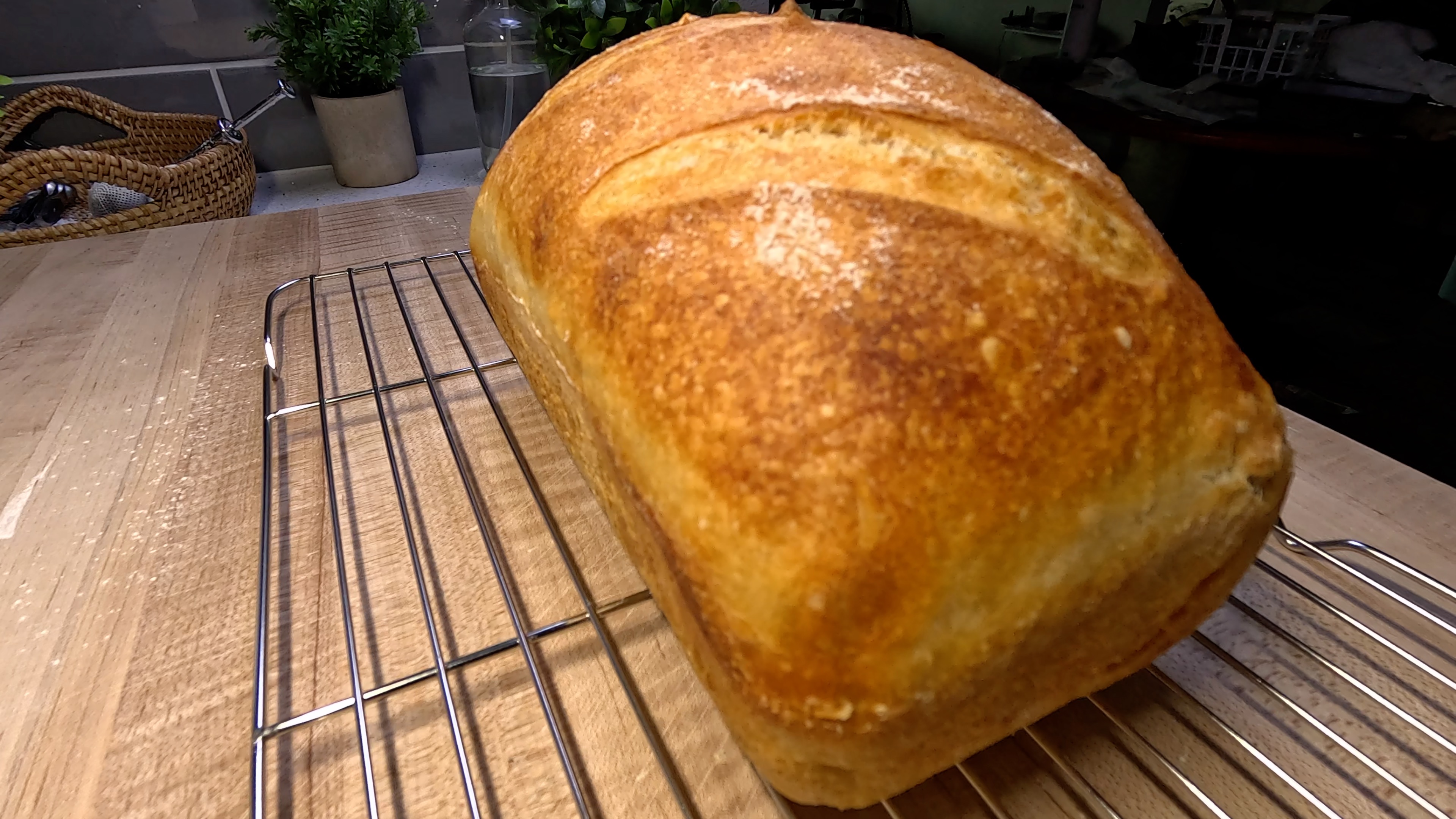
You're standing in the bread aisle, staring at a perfectly uniform loaf wrapped in plastic. It's soft, it's cheap, and it'll last two weeks without going moldy. Then you think about the sourdough sandwich loaf cooling on your counter at home — the one that took most of a day, smells faintly tangy and yeasty, and has a soft, pillowy crumb that you can't stop poking.
They're both bread. So what's actually going on between them?
Let's break it down — honestly, practically, and without the food snobbery.
The Ingredient List: Night and Day
Flip over a standard supermarket loaf and read the ingredients. Go ahead, I'll wait.
You'll typically find something like: enriched flour, water, high fructose corn syrup, soybean oil, yeast, salt, dough conditioners (DATEM, monoglycerides), calcium propionate (to retard spoilage), and maybe a handful of other additives you'd need a chemistry degree to pronounce.
Now look at a homemade sourdough sandwich loaf. The ingredient list is almost embarrassingly short: flour, water, salt, and a sourdough starter. Sometimes a little butter, honey, or milk if you want a richer, softer crumb — but that's it.
There are no preservatives, no dough conditioners, no stabilizers. Just real ingredients doing real work.
Why Does Store-Bought Bread Have So Many Additives?
Commercial bread is engineered for speed, consistency, and shelf life. Dough conditioners help machines process the dough faster. Preservatives keep mold at bay for weeks. Emulsifiers create that impossibly soft, squishy texture that stays uniform from slice one to slice twenty.
None of that is inherently evil — it's just a very different goal than what we're doing in our home kitchens.
The Fermentation Factor: This Is the Big One
Here's where sourdough bread genuinely earns its stripes — and it has nothing to do with being trendy.
Store-bought bread typically uses commercial instant yeast and is made in a matter of hours. The yeast does its job quickly: it produces CO2 to leaven the bread, and that's largely where its contribution ends. There's little time for anything more complex to develop.
Sourdough, on the other hand, is leavened by a living starter — a community of wild yeast and lactic acid bacteria that you've been feeding and nurturing. When these microorganisms ferment the dough, they don't just produce gas. They produce:
- Lactic and acetic acids — giving sourdough its signature tangy flavor
- Organic compounds — contributing to the complex, deep aroma you smell when that loaf comes out of the oven
- Enzymes — that begin breaking down the flour's starches and proteins, making nutrients more bioavailable
And crucially, this fermentation takes time. A same-day sourdough sandwich loaf might ferment for 6–8 hours. An overnight cold proof adds even more flavor complexity. That time is the ingredient that commercial bread simply cannot replicate.
Flavor and Texture: Let's Be Honest
Store-bought sandwich bread is designed to be neutral. It's a vehicle for your peanut butter and jelly, your turkey and cheese, your avocado toast. It's not supposed to compete with the filling.
A sourdough sandwich loaf has its own personality. There's a gentle tang, a subtle complexity, a depth of flavor that actually adds to whatever you put on it. The crumb is tender but with a little more chew. The crust — even on a soft sandwich loaf — has a bit more structure.
Is it better? That's subjective. But it's different in a way that most people notice the first time they taste it.
Practical tip: If you're new to sourdough sandwich bread and worried about too much tang, a same-day process (shorter fermentation) will give you a milder flavor. A longer, cold overnight ferment deepens that characteristic sourness. You're in control.
Our Same-Day Sourdough Sandwich Loaf with Seeds is the perfect place to start — soft, pillowy, and ready in a single day with a gorgeous seeded crust.
Nutrition: What the Science Actually Says
This is where things get genuinely interesting — and where sourdough has some real, evidence-backed advantages.
The long fermentation process in sourdough does several meaningful things:
- Phytic acid reduction: Grains contain phytic acid, which can bind to minerals like iron, zinc, and magnesium, making them harder for your body to absorb. The fermentation process significantly reduces phytic acid, meaning more of those minerals become available to you.
- Lower glycemic impact: Multiple studies suggest that sourdough bread, due to its organic acids and altered starch structure, causes a slower rise in blood sugar compared to conventional bread made with the same flour.
- Easier digestion: The enzymes and acids produced during fermentation begin pre-digesting the gluten and starches. Many people who find conventional bread heavy or bloating report digesting sourdough more comfortably.
This doesn't make sourdough a miracle food, and it's not a substitute for medical advice — but these are real, studied differences worth knowing about.
Shelf Life: The Honest Trade-Off
Let's talk about the one area where store-bought genuinely wins: shelf life.
Your homemade sourdough sandwich loaf, made without preservatives, will stay fresh at room temperature for about 3–5 days if stored in a bread bag or wrapped in beeswax wrap. After that, it starts to stale (though it makes incredible toast and croutons).
You can slice and freeze it the day it's baked, and it'll keep well frozen for up to 3 months — just pull out slices as you need them and toast from frozen.
Store-bought bread, thanks to calcium propionate and other preservatives, can sit on your counter for 2 weeks without visible mold. Whether that's a selling point is up to you.
Practical tip: Bake your sourdough sandwich loaf, let it cool completely, then slice and freeze the majority of it immediately. You'll always have fresh sourdough on hand without the pressure to eat an entire loaf in three days.
The Cost Question
Here's a pleasant surprise: homemade sourdough is usually cheaper than a comparable quality artisan loaf from a bakery, and often comparable to or cheaper than a mid-range grocery store loaf.
A basic sourdough sandwich loaf needs little more than flour, water, and salt. Once you have an active starter (which you feed regularly anyway), the cost per loaf is genuinely low. Where it does cost you is time — but for most of that time, the dough is just sitting there doing its thing while you live your life.
If you're still building your confidence with sourdough, our No-Knead Sourdough Bread (No Dutch Oven) is a wonderful, low-effort introduction to baking with a starter before you tackle a sandwich loaf specifically.
So, Which Should You Choose?
Honestly? Both have their place.
Store-bought bread is convenient, consistent, and perfectly fine for plenty of situations. Nobody is judging you for keeping a backup loaf in the pantry.
But a homemade sourdough sandwich loaf gives you something that a plastic-wrapped loaf simply cannot: real ingredients, genuine fermentation, and the deeply satisfying knowledge that you made it yourself.
Once you've had a grilled cheese on a sourdough sandwich loaf you baked yourself — golden on the outside, chewy and rich on the inside — it becomes very hard to go back.
Ready to Bake Your Own?
If you've been curious about baking a sourdough sandwich loaf at home, there has never been a better time to try. You don't need a stand mixer, a banneton, or years of experience. You need flour, water, salt, a starter, and a loaf pan.
Start with our Same-Day Sourdough Sandwich Loaf with Seeds — it's designed to take you from starter to sliced loaf in a single day, with a soft crumb and a beautifully seeded crust that makes even simple sandwiches feel special.
Your future self — the one pulling a golden, fragrant loaf out of the oven — is going to be very glad you gave it a shot. Let's bake!
Products Mentioned in This Post

2-in-1 Pre-Seasoned Cast Iron Dutch Oven Pot with Skillet Lid Set, 10" Skillet

KneadAce Cotton Rope Banneton Bread Proofing Basket Set, Oval & Round Bread Baskets with Liners & Covers

John Boos RA-Board Series Rectangular Wooden Maple Cutting Board 30”x23.25” – 2.25” Thick

Sally's Organics® Empty Clear Glass Spray Bottles - Refillable 16 oz

Rattan Storage Basket, Hand Woven Fruit Basket with Handles

AFUN Chef Aprons for Men Women with Oversized Pockets


Comments
Sign in to join the conversation
Sign In